Roof Leak Water Damage in Oregon, OH
Rain that gets past shingles, flashing or vents soaks insulation and ceilings below, and the crew traces the leak, removes wet materials and dries the attic, ceiling and walls it reached.
(888) 612-9219Oregon roof leak help
First steps for roof leak water damage in Oregon
- 1Contain the drip
Place buckets, move furniture and lay plastic under active leaks.
- 2Photograph inside and out
Capture ceiling stains and the roof area from the ground.
- 3Arrange a roof cover
A roofer can tarp or repair the opening so more rain stays out.
- 4Call the drying crew
Report the rooms affected and any sagging ceiling, so tear-out and drying match the leak.
What does roof leak water damage cost in Oregon, MI?
Roof leak cleanup runs $800 to $2,000 for one ceiling area, $2,000 to $4,500 when the attic and two rooms are wet, and $4,000 to $6,500 or more after a major storm leak reaches several rooms.
| Size of the loss | Typical range | What usually moves it |
|---|---|---|
| Single ceiling area | $800 to $2,000 | Light stain, wet insulation pulled, ceiling dried in place |
| Attic plus two rooms | $2,000 to $4,500 | Damp decking and insulation, opened ceiling, walls dried |
| Severe storm leak | $4,000 to $6,500+ | Several rooms wet, ceilings and walls opened, full structural drying |
Planning ranges, not a quote: the water category, the wet square footage, the material class and how soon drying started move the final number most. The water damage cost calculator narrows it for your own loss.
How roof leak water damage is handled in Oregon
- 1
Trace the leak
The crew follows stains through the ceiling to the attic and notes the likely roof opening.
- 2
Remove wet materials
Soaked insulation and ceiling drywall that cannot dry come out and are bagged.
- 3
Dry the structure
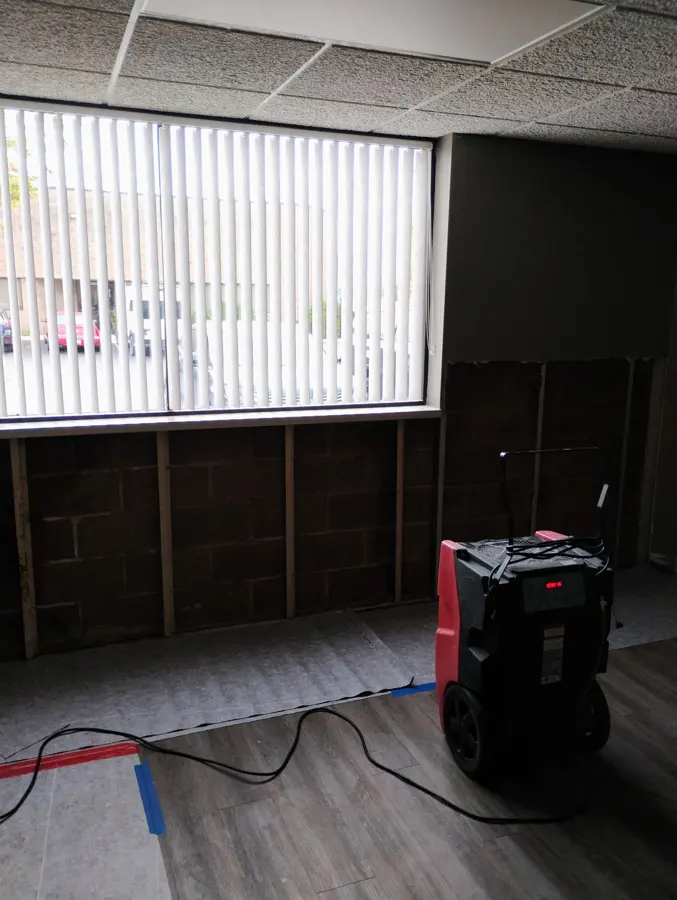
Air movers and dehumidifiers work on attic decking, joists and wall cavities.
- 4
Confirm and hand off
Readings confirm dry framing, and photos pass to the roofer and the adjuster.
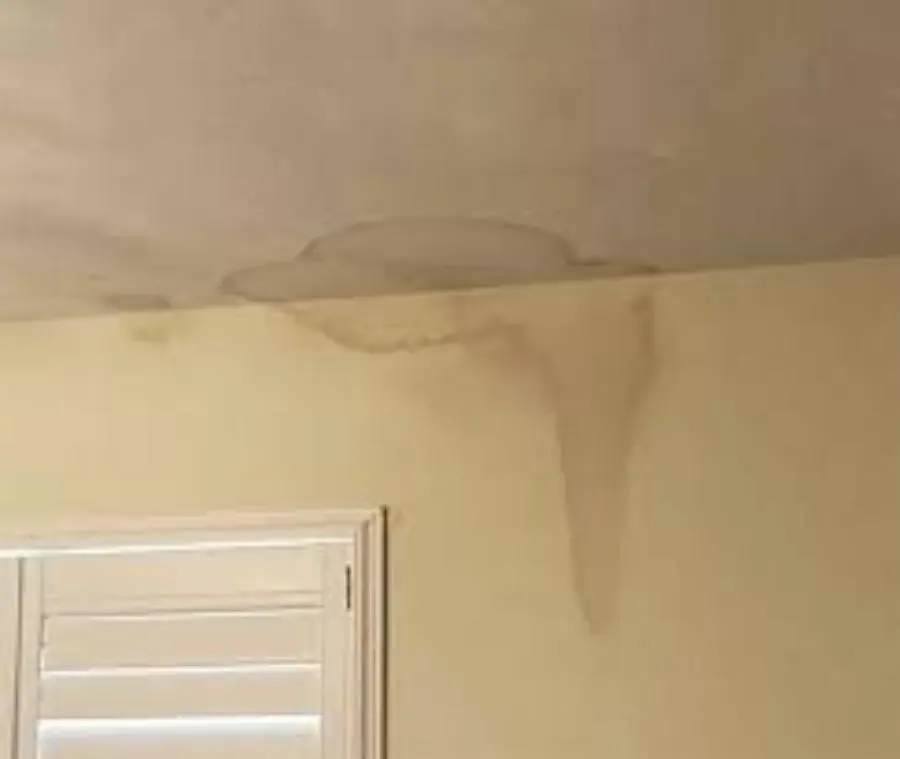
A roof leak often starts small: a lifted shingle, cracked flashing or a worn vent boot lets rain in, and the water runs along the decking before it drops to the ceiling, so the stain can sit far from the actual opening.
Where storm rain gets in
The common weak points are small parts rather than whole roofs, and a roofer confirms which one failed.
- Shingles that are lifted, cracked or missing after a storm
- Flashing around chimneys, walls and skylights
- Plumbing vent boots, exhaust vents and other roof penetrations
- Valleys and eaves where water concentrates
Older roofs and small parts
Oregon's median home was built in 1971, so flashing, vent boots and sealants on many roofs have had decades to age, and those small parts are common leak points. A leak caught early stays in one ceiling bay. One that runs through a storm can wet the attic decking, the insulation and the walls below it, and the moisture readings decide how far the drying has to reach.
Who does what after a roof leak
The roofer stops the entry point with a repair or a temporary cover. The restoration crew handles everything inside: pulling wet insulation, opening ceilings that hold water, and running air movers and dehumidifiers until the attic, ceiling and walls read dry. Photos of the damaged roof area and the interior go into the same file for the adjuster.
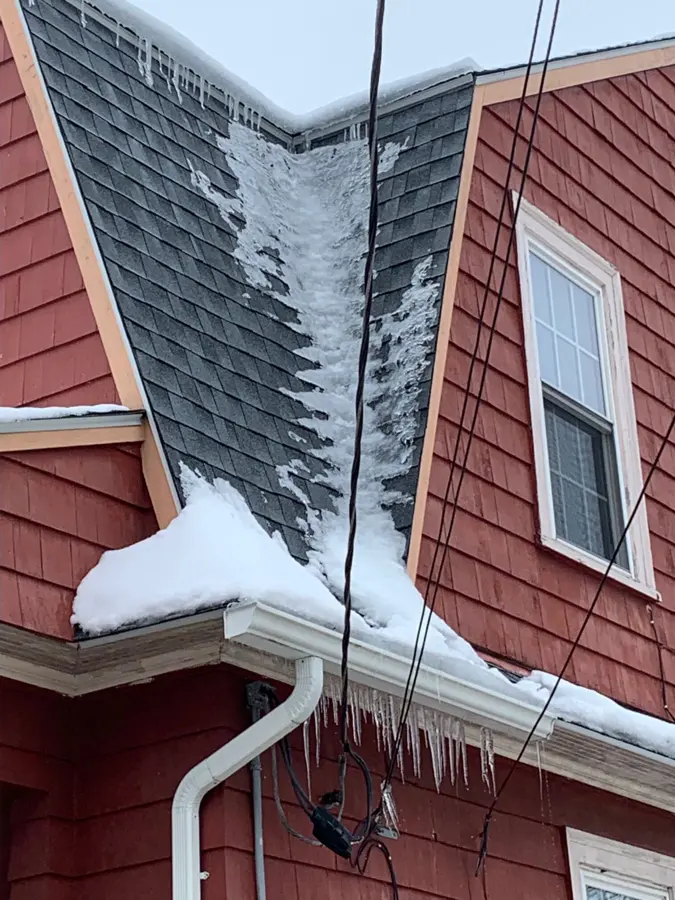
Meltwater that leaks in winter is covered under ice dam water damage, while a stain that spreads below a bathroom or an upstairs unit is traced through ceiling leak water damage.
Roof leak water damage across Oregon and nearby communities
Roof leak work covers Oregon, OH, from houses and rentals along Coy Road, Seaman Road and Starr Avenue to shops, offices and schools near Navarre Avenue, across ZIP code 43616, after any storm that finds a weak spot in a roof. Dispatch runs day and night once a ceiling starts to drip.
The same service nearby: roof leak water damage in Monroe, Flat Rock, Milan.
More water damage services in Oregon
Roof Leak Water Damage questions in Oregon, MI
How can a small roof leak damage a whole ceiling?
Water runs along decking and rafters before it drops, soaking insulation and spreading through drywall, so the visible stain is often smaller than the wet area above it.
Should a roofer or a restoration crew come first?
Both matter: the roofer stops more rain from entering, the restoration crew removes wet material and dries the inside, and the two jobs can overlap.
Is insulation always replaced after a roof leak?
Wet fiberglass or cellulose insulation often has to come out, because it stays damp, loses its value and can hold moisture against the ceiling for a long time.
Does insurance cover storm roof leaks?
Many policies cover interior water damage from a sudden storm opening in the roof, but not wear or neglect, so dated photos of the roof and the ceiling help the adjuster.
Can a ceiling stain be painted over right away?
Not until readings show the drywall and framing are dry, since paint over damp drywall traps moisture, and a stain that bleeds through needs a stain-blocking primer after drying.
A roof leak over an Oregon ceiling needs tracing and drying
The crew follows the water to its roof opening, removes wet insulation and drywall, and dries the attic, ceiling and walls, with photos kept for the roofer.