Ice Dam Water Damage in Monroe, MI
Heat escaping into the attic melts snow on the roof, and the water refreezes at the cold eaves. The pond behind that ice works under the shingles. The drying team dries the attic insulation, walls and ceilings it reaches.
(888) 612-9219Dripping during a thaw? Call 24/7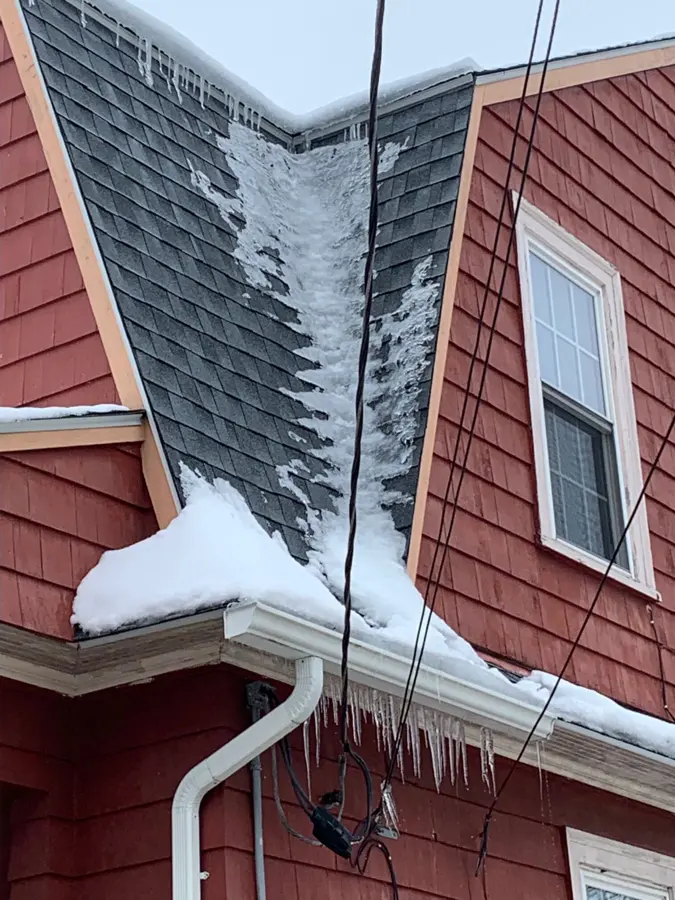
First steps for ice dam water damage in Monroe
- 1Catch the drips
Put buckets and towels under drips and move furniture away from the wall.
- 2Check the lights
Turn off breakers for fixtures that are wet or dripping.
- 3Stay off the roof
Chipping ice from a ladder is dangerous and damages shingles.
- 4Photograph the stains
Photograph ceiling and wall stains as they appear, then call.
What does ice dam water damage cost in Monroe, MI?
In Monroe, MI, ice dam water damage typically runs $1,000 to $7,000 to dry out, depending on how much attic insulation got wet, how many walls and ceilings the water reached and how long it ran before drying started; roof and ice removal are separate costs.
| Size of the loss | Typical range | What usually moves it |
|---|---|---|
| One ceiling edge | $1,000 to $2,500 | Small stain, some insulation removed, ceiling dried in place |
| Wall cavity and ceiling | $2,500 to $5,000 | Water inside the wall, drywall opened low, cavity drying |
| Several rooms | $4,500 to $7,000+ | Long thaw cycle, attic and walls wet, full structural drying |
Planning ranges, not a quote: the water category, the wet square footage, the material class and how soon drying started move the final number most. The Monroe water damage cost calculator narrows it for your own loss.
How ice dam water damage is handled in Monroe
- 1
Trace from the eaves
Meters and thermal imaging follow the water from the attic down the wall.
- 2
Remove wet insulation
Soaked attic insulation and wet wall insulation come out.
- 3
Open where needed
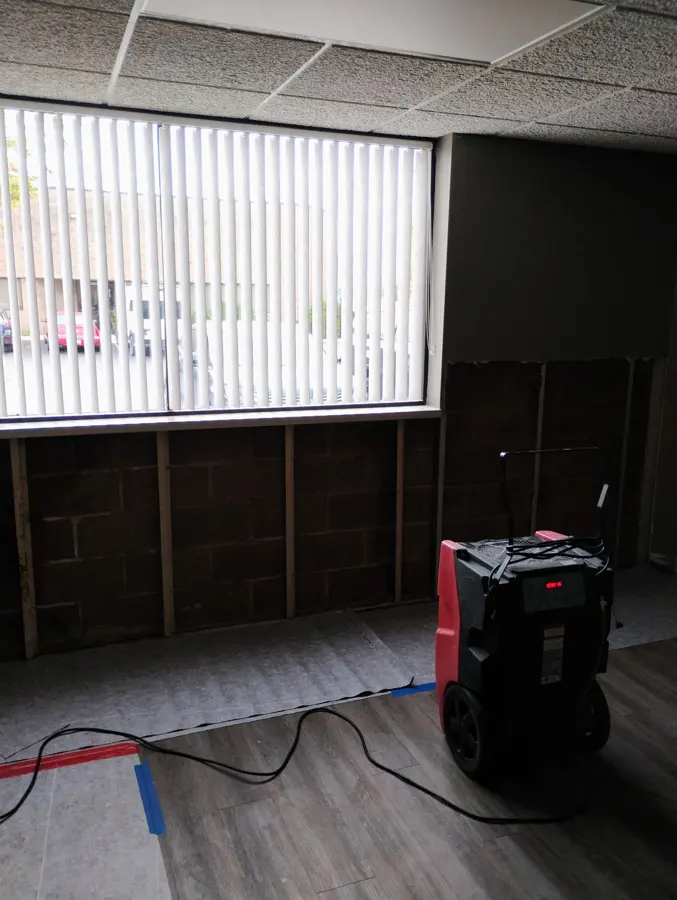
Wet drywall at the wall base or ceiling edge is opened to dry the cavity.
- 4
Dry and confirm
Drying runs until the framing and drywall read dry.
Ice dams form when the roof deck over a heated attic stays warm enough to melt snow while the overhang at the eaves stays below freezing. Monroe winters, with snow followed by thaws and January lows around 16 F, build them along the gutters of older homes with thin attic insulation. The meltwater backs up under the shingles and runs down inside the outside wall.
Where ice dam water shows up
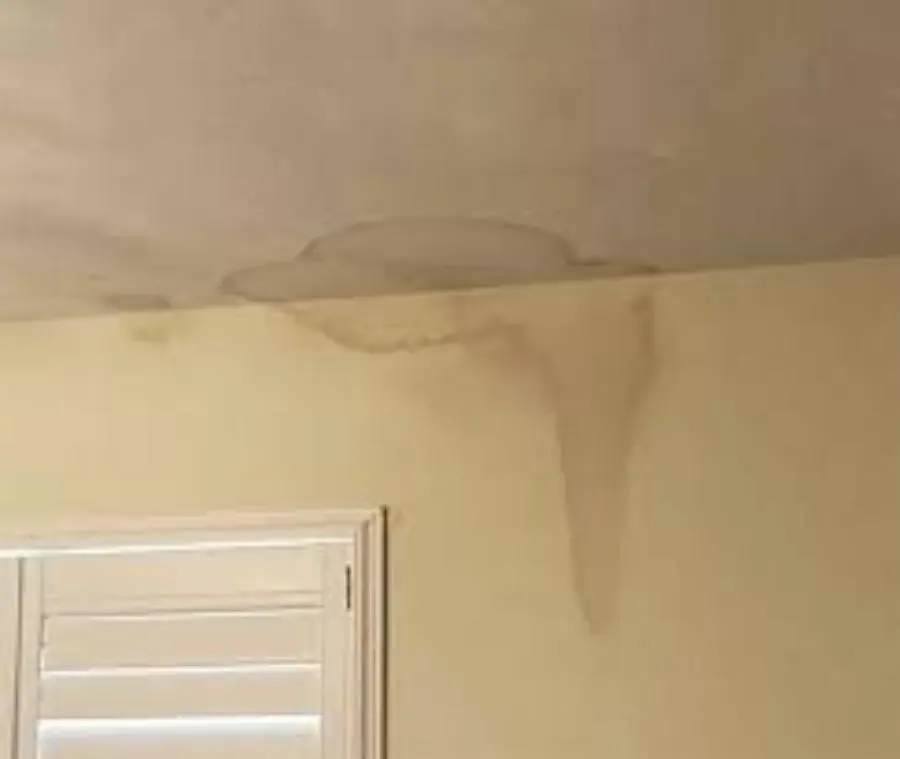
- Stains at the top of outside walls, where the ceiling meets the wall
- Wet attic insulation just inside the eaves
- Peeling paint and bubbling around window heads
- Drips from soffit vents and recessed lights near the outside wall
Drying an ice dam leak
Wet loose-fill and batt insulation in the attic stops insulating and holds water against the ceiling drywall, so the soaked sections are removed. The tech who does the walkthrough reads the outside walls below the leak with thermal imaging and meters, because water often runs down inside the wall cavity to the floor. Ceilings that read wet but hold their shape are usually dried in place.
Each thaw can send in more water, so the drying team keeps reading the wall after warm spells until the roof edge is clear. It is a different problem from a rain roof leak, which shows up in storms rather than in thaws.
Stopping the next ice dam
Air sealing and more attic insulation keep heat out of the roof deck, and good attic ventilation keeps the deck cold. Roof and ice work is for a roofer, but the drying record helps both the claim and the repair. Energy Saver covers attic air sealing and insulation, and Ready.gov covers getting a home ready for winter storms.
Ice dam water damage across Monroe and nearby communities
Monroe Water Damage Restoration covers ZIP 48161 and 48162 with 24/7 dispatch, from Downtown Monroe and the Old Village along the River Raisin to Orchard East between the river and Plum Creek, the North Monroe Street and Telegraph Road neighborhoods and the homes off LaPlaisance Road on the south side.
Nearby coverage reaches Frenchtown Township and the Lake Erie beach communities, Monroe Township, Raisinville, LaSalle, Luna Pier, Newport, Carleton and Dundee.
More water damage services in Monroe

Ice Dam Water Damage questions in Monroe, MI
What causes ice dams?
Heat leaking into the attic warms the roof deck, snow melts and runs down to the cold eaves, then refreezes into a ridge of ice that traps more meltwater behind it.
Why is the stain at the top of my outside wall?
Water backing up under the shingles at the eaves enters right above the outside wall, so it shows first where the ceiling meets that wall.
Is ice dam damage covered by insurance?
Many homeowners policies cover sudden water damage from ice dams. Coverage depends on your policy, so check with your own insurer.
Should I remove the ice myself?
Chipping ice from a ladder is dangerous and can tear shingles. Ice removal is a job for a roofing pro with steam equipment.
Does wet attic insulation have to be replaced?
Soaked insulation usually comes out, because it holds water against the ceiling and loses its insulating value.
How long does drying take after an ice dam leak?
Usually three to five days for a ceiling edge, longer when water ran inside the wall to the floor.
Ice dam leak in Monroe? Call now.
Meltwater comes back in with every thaw. The drying team traces it from the eaves, removes wet insulation and dries walls and ceilings to the IICRC S500 goal.