Ice Dam Water Damage in Oregon, OH
When snow melts on a warm roof and refreezes at the eaves, the ice dam traps meltwater that backs up under shingles and into attics, ceilings and walls, and the crew removes and dries what it soaked.
(888) 612-9219Oregon ice dam leaks help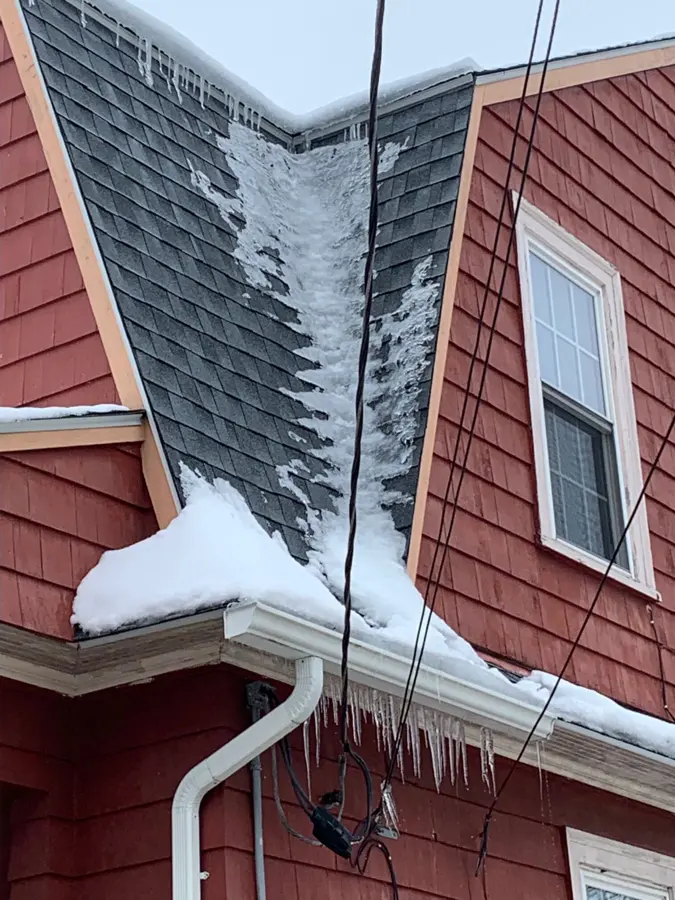
First steps for ice dam water damage in Oregon
- 1Photograph the stains
Capture ceiling and wall stains and the ice at the eaves.
- 2Protect the room
Move furniture, set out buckets and leave a bulging ceiling to the crew.
- 3Call about the leak
Share where stains appear and how long they have grown.
- 4Arrange ice removal
A roofer clears the dam safely, since chopping ice can damage shingles.
What does ice dam water damage cost in Oregon, MI?
Ice dam cleanup runs $1,000 to $2,500 for one ceiling edge, $2,500 to $5,000 once water is inside the wall cavity, and $4,500 to $7,000 or more when several rooms and the attic are wet. The length of the thaw cycle drives the final total.
| Size of the loss | Typical range | What usually moves it |
|---|---|---|
| Single ceiling edge | $1,000 to $2,500 | Light stain, attic insulation pulled, ceiling dried in place |
| Ceiling and wall cavity | $2,500 to $5,000 | Water behind drywall, low wall opening, cavity drying |
| Several rooms affected | $4,500 to $7,000+ | Long thaw cycle, attic and walls wet, full structural drying |
Planning ranges, not a quote: the water category, the wet square footage, the material class and how soon drying started move the final number most. The water damage cost calculator narrows it for your own loss.
How ice dam water damage is handled in Oregon
- 1
Inspect and photograph
The crew traces stains back to the attic and photographs the wet areas.
- 2
Remove wet insulation
Soaked attic insulation is pulled so the roof deck and joists can dry.
- 3
Open what holds water
Bubbled ceiling drywall is opened, and wall cavities are cut low when readings run high.
- 4
Dry and verify
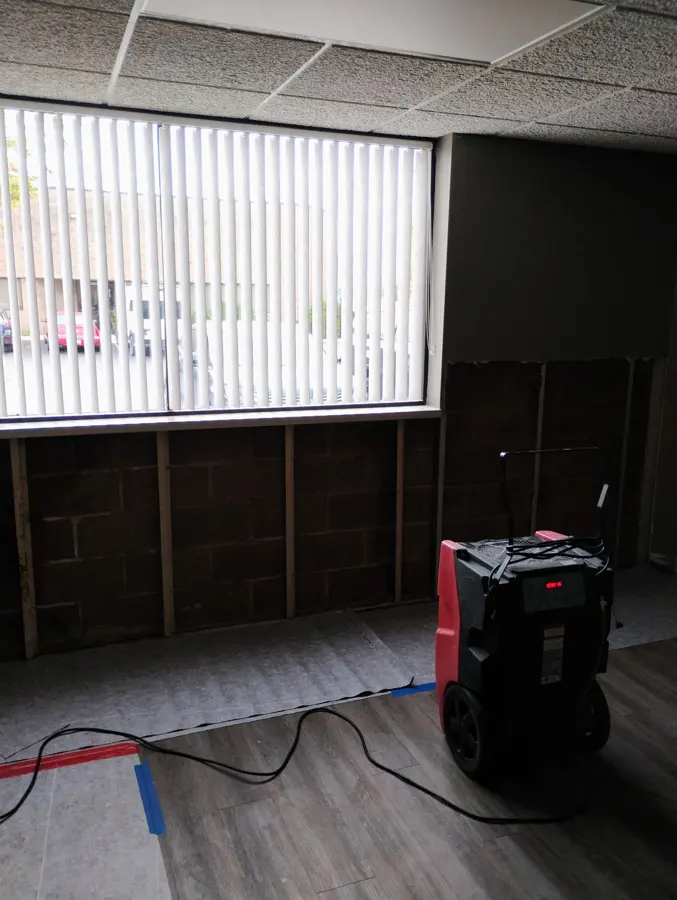
Air movers and dehumidifiers run until the ceiling, walls and attic read dry.
An ice dam forms when heat from the house melts snow on the roof and the runoff refreezes at the cold eaves. The ridge of ice blocks drainage, so meltwater backs up under the shingles and leaks into the attic, the ceiling edge and the top of the exterior wall.
Where ice dam water ends up
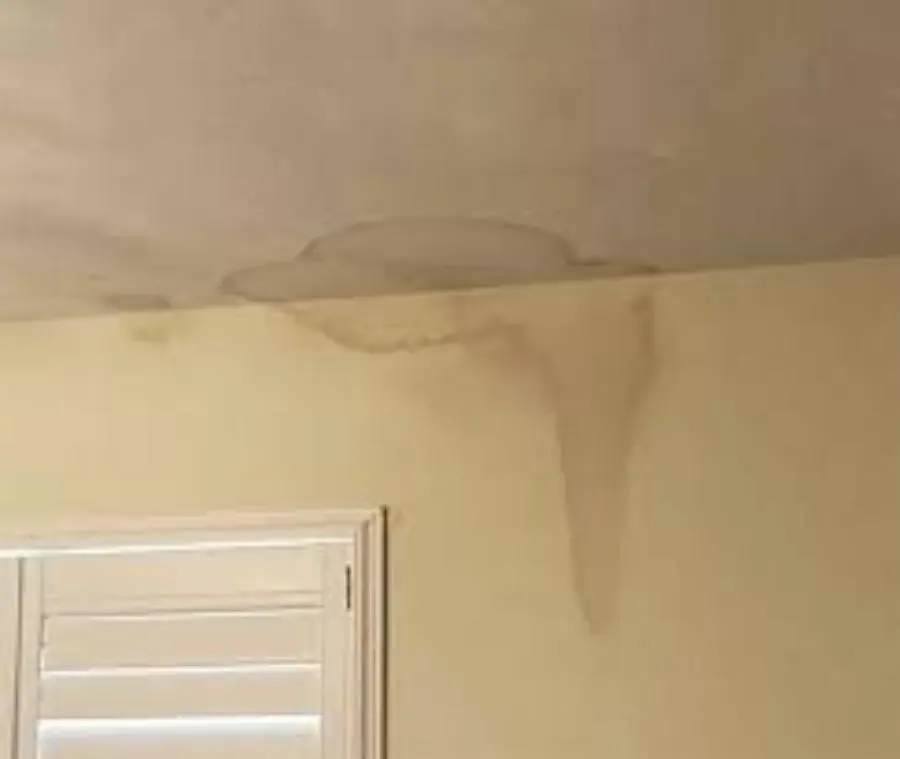
The leak is usually slow, which hides it: insulation soaks first, then drywall stains appear along exterior walls.
- Attic insulation that soaked, compressed and lost its value
- Ceiling drywall along the exterior walls
- Wall cavities where water ran down behind the drywall to the floor
- Window and door trim near the eaves
Older attics and heat loss
Roof heat is what feeds an ice dam, and older attics tend to leak more of it. With 4,095 of Oregon's 8,673 homes built before 1970, many attics were built to older insulation and ventilation standards, so warm air can reach the roof deck and melt snow unevenly. Any home can develop a dam when a cold stretch follows a snowfall, so the damage shows up across all ages of housing.
What the cleanup covers
The crew starts in the attic, pulling wet insulation that can no longer insulate and exposing the decking to dry. Ceilings with light staining are dried in place, while sagging or bubbled drywall is opened so the cavity can be dried. Wall cavities are checked with a moisture meter, and drying equipment runs until the framing matches dry areas. Roof repair and ice removal belong to a roofer.
Water that entered through shingles in a rainstorm rather than at the eaves belongs under roof leak water damage, and a stain with no clear roof source can be traced through ceiling leak water damage.
Ice dam water damage across Oregon and nearby communities
Ice dam work covers Oregon, OH, along corridors such as Navarre Avenue, Coy Road, Starr Avenue and Stadium Road, in neighborhoods like Ketcham's Home Gardens and Woodville Heights, and in apartment buildings and shops across ZIP code 43616. Crews dispatch day or night once a leak is spotted.
The same service nearby: ice dam water damage in Monroe, Flat Rock, Milan.
More water damage services in Oregon

Ice Dam Water Damage questions in Oregon, MI
What causes an ice dam?
Heat escaping into the attic melts roof snow, the runoff refreezes at the cold eaves, and the ice blocks drainage so meltwater backs up under the shingles.
Can the ceiling be saved after an ice dam leak?
Light staining can often be dried in place, while bulging or dripping drywall is opened so wet insulation above it can come out.
Does homeowners insurance cover ice dam damage?
Policies vary: many cover resulting interior water damage but not roof wear or ice removal, so photos, dates and moisture readings help the adjuster decide.
Should snow be raked off the roof?
Raking the first few feet from the eaves with a roof rake can reduce buildup, but climbing a roof or chopping ice is risky and can damage shingles.
How long does an ice dam leak take to dry out?
Ceilings and wall cavities usually take a few days with air movers and dehumidifiers, while attic framing and insulation removal can add time, and readings decide when the equipment leaves.
Ice dam leaks in an Oregon home need the wet materials out
The crew removes wet insulation, dries or opens the ceiling and wall, and records photos and readings for the roofer and the claim.