Structural Drying and Dehumidification in Monroe, MI
Surfaces dry in a day; framing, subfloor and block walls do not. The drying team sets air movers and dehumidifiers to the class of loss and logs readings every day until the structure matches a dry reference.
(888) 612-9219Walls and floors still wet? Call 24/7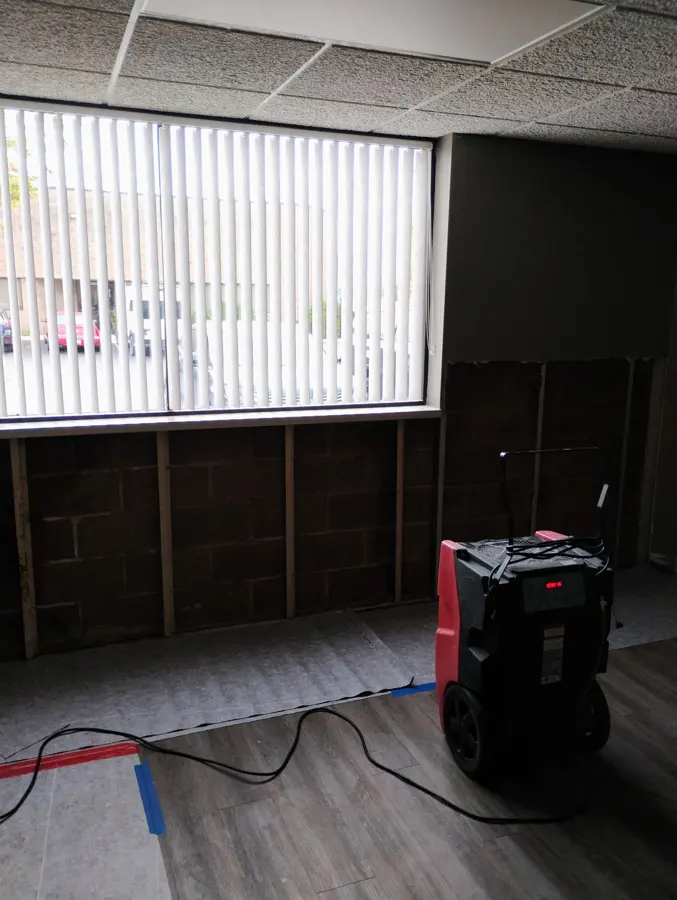
First steps for structural drying and dehumidification in Monroe
- 1Keep the heat steady
In winter, keep the house heated so warm air carries moisture to the dehumidifiers.
- 2Close the windows
Once the equipment runs, humid outside air only adds moisture back.
- 3Leave the equipment on
Air movers and dehumidifiers work around the clock; switching them off slows the job.
- 4Keep the readings
Ask for the daily drying log; it belongs in the claim file.
What does structural drying and dehumidification cost in Monroe, MI?
In Monroe, MI, structural drying typically runs $1,000 to $6,000, depending on the class of loss, how many rooms are drying, how many days the equipment runs and whether dense materials need desiccant or specialty drying.
| Size of the loss | Typical range | What usually moves it |
|---|---|---|
| Class 1 or 2, one area | $1,000 to $2,200 | Three to four days, A few air movers, one LGR dehumidifier |
| Class 3, several rooms | $2,200 to $4,500 | Walls and ceilings wet, more equipment, daily readings |
| Class 4, dense materials | $4,000 to $6,000+ | Block, plaster or hardwood, desiccant or mats, longer drying |
Planning ranges, not a quote: the water category, the wet square footage, the material class and how soon drying started move the final number most. The Monroe water damage cost calculator narrows it for your own loss.
How structural drying and dehumidification is handled in Monroe
- 1
Measure
The tech who does the walkthrough takes readings and sets a dry reference for each material.
- 2
Set the equipment
Air movers and dehumidifiers go in for the class of loss.
- 3
Log every day
Moisture and psychrometric readings are taken and the setup adjusted daily.
- 4
Prove dry
Equipment comes out only when every material reads dry.
Structural drying is the part of a water loss nobody sees and everybody pays for when it is skipped. Water that soaked into studs, subfloor, block and plaster keeps evaporating for days. If the house is closed up before those materials are dry, the moisture stays trapped behind new paint and flooring.
Class of loss sets the equipment
The IICRC S500 standard sorts losses into Class 1 to 4 by how much water was absorbed and how fast the materials give it up.
- Class 1: a small area, little absorbed
- Class 2: a whole room, walls wet up to about two feet
- Class 3: walls, ceilings and insulation saturated, often from above
- Class 4: dense materials such as hardwood, plaster and concrete block that hold water deep
Air movers are placed to the room's evaporation load, and LGR dehumidifiers pull the moisture back out of the air. Class 4 losses often need desiccant dehumidifiers or specialty floor mats.
Monroe's block walls and plaster
Many Monroe basements have concrete block walls, and older homes near downtown have plaster on wood lath. Both hold water much longer than drywall. The drying team reads them every day and keeps the equipment running until they match a dry reference, instead of pulling it on a schedule. Humid summers make the dehumidifiers work harder; in winter, keeping the house heated helps the air carry moisture to the equipment.
How dry is dry
Drying is complete when the wet materials read within 2 to 4 points of the same material in an unaffected part of the house, and the psychrometric log shows the air getting drier, not just cooler. EPA flood cleanup advice explains why materials should be dried within 24 to 48 hours, and Michigan State University Extension publishes home and flood recovery information for Michigan. Drying usually follows water extraction, and the drying time estimator gives a planning range.
Structural drying and dehumidification across Monroe and nearby communities
Monroe Water Damage Restoration covers ZIP 48161 and 48162 with 24/7 dispatch, from Downtown Monroe and the Old Village along the River Raisin to Orchard East between the river and Plum Creek, the North Monroe Street and Telegraph Road neighborhoods and the homes off LaPlaisance Road on the south side.
Nearby coverage reaches Frenchtown Township and the Lake Erie beach communities, Monroe Township, Raisinville, LaSalle, Luna Pier, Newport, Carleton and Dundee.
More water damage services in Monroe
Structural Drying and Dehumidification questions in Monroe, MI
Why can't fans alone dry it?
Fans move air but do not remove moisture from the house. Without dehumidification, the water just moves from the walls into the air and back.
How long does structural drying take?
Most clean-water losses dry in three to five days. Block walls, plaster and hardwood take longer.
What is an LGR dehumidifier?
A low grain refrigerant dehumidifier keeps pulling water out of the air at humidity levels where ordinary dehumidifiers stall.
Why is the equipment so loud?
Air movers push a lot of air across wet surfaces to speed evaporation. The noise ends when the readings say dry.
What is a dry reference?
The moisture reading of the same material in a part of the house the water never reached. Wet materials are dry when they get within 2 to 4 points of it.
Can I turn the equipment off at night?
It is best not to. Drying runs around the clock, and switching equipment off slows the job and lets moisture build back up.
Still wet behind the walls in Monroe? Call now.
The drying team sets air movers and LGR dehumidifiers to the class of loss and logs a reading every day until the structure reads dry, 24/7.