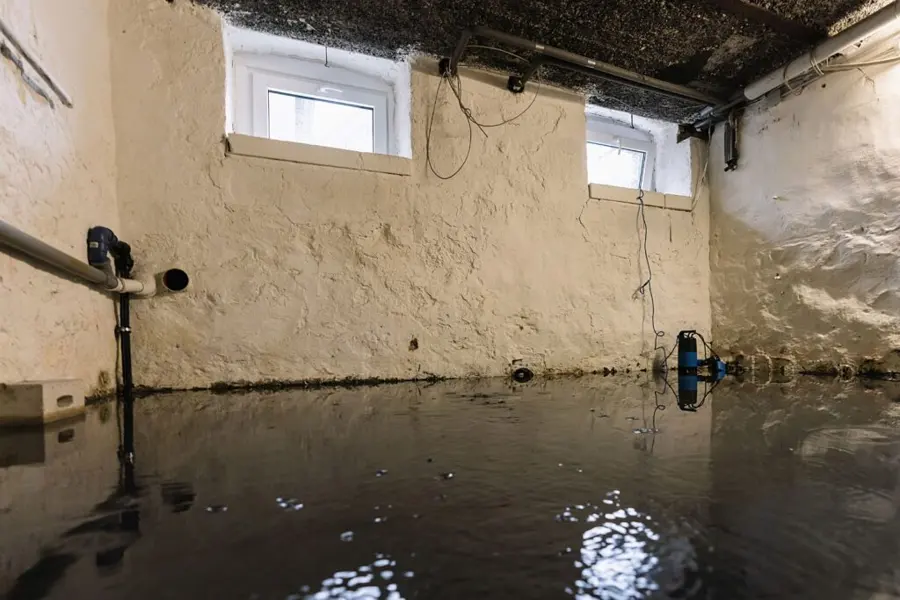
In Oregon, OH, the city itself names the most common route for a basement backup. Its Basement Backup Grant page says a basement floor drain with footer tiles connected to it is one of the most common cases. Older construction typically sent footer tiles to the floor drain, which connects to the sanitary sewer, so when rain fills that sewer the water comes back up at the lowest point.
Key takeaways
- The City of Oregon says a basement floor drain tied to footer tiles is one of the most common backup cases.
- The city says sanitary sewer overflows typically happen in extreme wet weather, when rain and groundwater fill the sanitary sewer and pressure is relieved through overflows or backups at its lowest points.
- Oregon Codified Ordinance 925.26 bans sending stormwater, groundwater or roof runoff to the sanitary sewer.
- The city's Basement Backup Grant shares the cost of backwater valves and of removing stormwater connections such as footer tiles.
- Sewage from a floor drain is Category 3, so soaked carpet, pad, drywall and insulation come out and the structure is dried to a reading.
How a floor drain ends up tied to the sewer
Footer tiles are drain pipes laid around a foundation to carry groundwater away from the walls. In older construction, the city says, they were typically sent to the floor drain, which connects to the sanitary sewer.
That put groundwater and rain into a pipe built for household waste.
- Rain soaks the ground around the foundation.
- Footer tiles collect the groundwater and carry it toward the floor drain.
- The floor drain connects to the sanitary sewer, so the water joins the household flow.
- In extreme wet weather the sewer fills, and the same drain becomes the exit for the overflow.
Why the age of Oregon homes matters
Oregon's housing is mostly older. The American Community Survey counts 5,843 of the city's 8,673 homes as built before 1980, and 4,095 as built before 1970, which is why the city's note about older construction matters here.
What the city says about wet weather backups
The City of Oregon says sanitary sewer overflows typically happen during extreme wet weather, when rain and groundwater fill the sanitary sewer. A full system relieves pressure through overflows or backups at its lowest points.
The city keeps its sanitary sewers separate from its storm sewers, so rain that reaches the sanitary side is rain in the wrong pipe.
What one April rain did to the plant
In mid April 2009, 1.6 inches of rain in 24 hours pushed the wastewater plant's flow above 21 million gallons a day, about 5 times its normal base flow.
The plant can treat 8 million gallons a day normally and 36 million gallons a day in wet weather, which shows how far wet weather stretches the system.
Old clay sewer pipe and why age matters
The city says its sanitary sewers built before 1970 were typically vitrified clay pipe, which tends to deteriorate at joints and lateral connections as it ages. The oldest sanitary sewer pipes date to the late 1920s, and most of them are in the Wheeling Street Sanitary District.
City sewer rehabilitation has covered Cresceus Heights, Euclid Park and Old Eastmoreland, with later phases planned for Ketcham's Little Farms, Woodville Heights, Ketcham's Home Gardens and Moundview.
- Where the trouble starts: joints and lateral connections are where the city says clay pipe tends to deteriorate.
- Where the oldest pipe is: the Wheeling Street Sanitary District holds most of the late 1920s pipe.
- What the city is doing: sewer rehabilitation and lining projects on named streets and neighborhoods.
What the city program and ordinance mean for a homeowner
Beginning in 2007, the city's Inflow and Infiltration Reduction Program has worked to remove stormwater from the sanitary sewer. The Basement Backup Grant shares the cost of installing backwater valves and removing stormwater connections such as footer tiles.
Oregon Codified Ordinance 925.26 bans sending stormwater, groundwater or roof runoff to the sanitary sewer. A sump pump may drain to the ground or a storm sewer, but not to the sanitary sewer.
- Backwater valve: the grant shares the cost of installing one.
- Footer tile connection: the grant also covers removing stormwater connections such as footer tiles.
- Eligibility and terms: those are questions for the city, because the program sets its own rules.
A failed pump is a separate problem
A sump pump that stops is a different failure from a floor drain backup, and it has its own steps. A sump pump failure cleanup deals with groundwater and runoff, while a floor drain backup brings sewage.
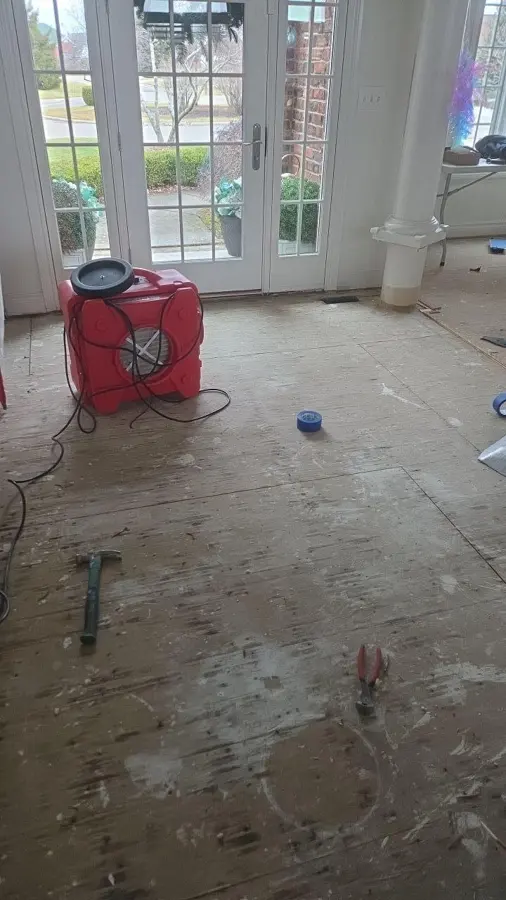
First steps when the drain backs up
A basement that fills from a floor drain is a sewage loss, and the first steps protect health before they protect belongings.
- Stop running water in the house, since every flush and load of laundry adds to the backup.
- Stay out of the water, and switch off basement power only from a dry spot.
- Keep children and pets upstairs, and skip the shop vacuum and the bleach.
- Photograph the drain, the water level and every wet item.
- Note the weather and the date, because the city ties backups to wet weather.
- Call a restoration team early; the Oregon, OH water damage pros start with containment and extraction at any hour.
What the cleanup removes, cleans and dries
Floor drain sewage is Category 3, the most contaminated class of water. The restoration team contains the area, removes what the water touched, cleans and treats the surfaces and then dries the structure.
A full sewage backup cleanup in Oregon follows that order.
Removed
- Carpet, pad and insulation the sewage touched
- Drywall below and just above the wet mark
- Particleboard and other porous materials that cannot be cleaned
Cleaned, treated and dried
Concrete, tile and metal are cleaned and treated with an EPA-registered antimicrobial. Framing is cleaned, treated and dried, and moisture readings decide when the job ends.
A basement flooding cleanup in Oregon is finished when moisture readings match a dry reference.
Records for the claim file
Sewer backup coverage is usually a separate endorsement on a homeowner policy, so the wording decides the claim. A clear file helps whichever way the policy reads.
- Dated photos and video of the drain, the water and each damaged item
- The date, the weather and when the water first came up
- A written list of what was removed, with rough ages and values
- The restoration team's removal log and daily moisture readings
- Notes on any contact with the city and what was said
Questions
Why does a basement floor drain back up in Oregon, OH?
The city says sanitary sewer overflows typically happen in extreme wet weather, when rain and groundwater fill the sanitary sewer and pressure is relieved through backups at its lowest points. A floor drain tied to footer tiles is one of the most common cases the city names.
What is a footer tile?
A footer tile is a drain pipe laid around a foundation to carry groundwater away from the walls. In older construction it was typically connected to the floor drain.
Can a sump pump drain to the sanitary sewer in Oregon?
No. Oregon Codified Ordinance 925.26 bans sending stormwater, groundwater or roof runoff to the sanitary sewer, and a sump pump may drain to the ground or a storm sewer instead.
Does the city grant pay for cleanup?
As the city describes it, the Basement Backup Grant shares the cost of installing backwater valves and removing stormwater connections such as footer tiles. Whether a household qualifies is a question for the city.
Is the water from a floor drain backup safe to touch?
No. It is sewage, handled as Category 3, so protective gear and containment are needed and the porous materials it touched are removed.