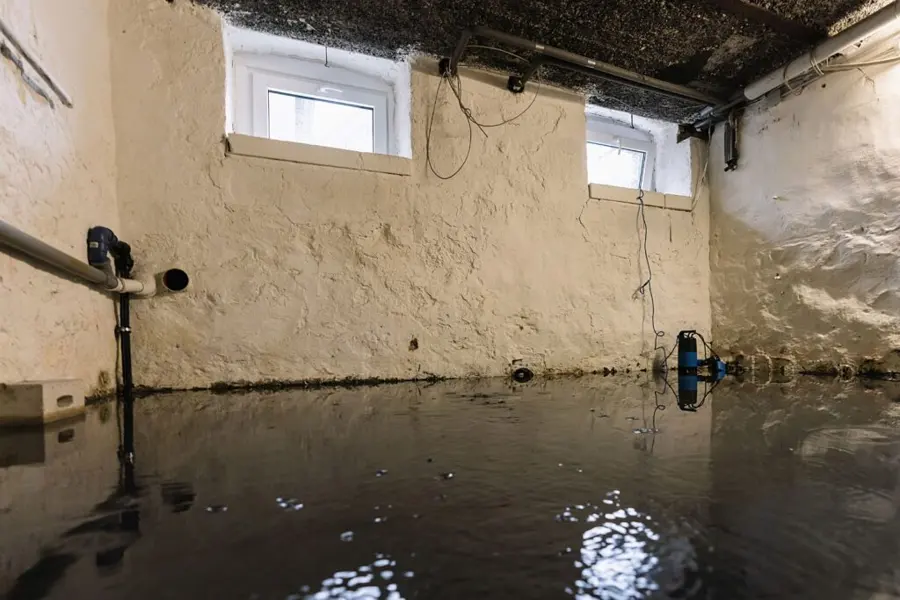
In August 2014, a storm of about 4 to 6 inches of rain over a couple of days flooded 14 Trenton homes, according to the city's 2017 resiliency plan. The same plan says repair costs varied with two things: whether a home had a finished basement and whether a furnace was stored there. That detail explains a lot about how a flooded lower level is scoped and dried.
Key takeaways
- The 2017 city plan says 14 Trenton homes flooded in the August 2014 storm of about 4 to 6 inches over a couple of days.
- It also says flood repair costs varied with whether a home had a finished basement and whether a furnace was stored there.
- Metro Detroit's main flooding was Monday, August 11, 2014, and the governor declared a state of emergency on August 14.
- Finished materials such as carpet, pad, drywall and trim come out, and a furnace that sat in water needs a technician's check before it runs.
- Hydric soils make up approximately 17.7 percent of Trenton's soils and can hold standing water, which is one reason wet ground can linger after the rain.
What happened in August 2014
The storm
Metro Detroit's main flooding came on Monday, August 11, 2014, and the governor declared a state of emergency on August 14. The flooding was a federally declared disaster.
In Trenton, the city plan counts 14 homes flooded from a storm of about 4 to 6 inches over a couple of days.
A smaller storm for comparison
The same plan notes that a less severe storm in September 2016 brought about 2.5 inches of precipitation. It shows how much of the story is the size of the storm, not just the neighborhood.
- August 2014: about 4 to 6 inches over a couple of days, with 14 Trenton homes flooded
- September 2016: about 2.5 inches, described as a less severe storm
- Source for both: the 2017 city plan
Why finished basements and furnaces changed the cost
The 2017 plan says flood repair costs in August 2014 varied with whether a home had a finished basement and whether a furnace was stored there. The reasons are practical.
The plan does not say how many Trenton homes have basements. It only notes that these two features changed what repairs cost.
- Finished space: carpet, pad, drywall, trim and cabinets each have to be removed, dried or replaced.
- Unfinished space: bare concrete and block can usually be cleaned and dried in place.
- Mechanical equipment: a furnace or water heater in the water needs a technician's check, and sometimes replacement, before it runs.
- Ducts, wiring and controls near the floor add to the list of items to inspect.
Flood zones, soil and storm drains
FEMA's Flood Insurance Rate Maps for Trenton took effect on February 2, 2012. The 2017 city plan says homes in the floodplain rose from about 180 to approximately 825, most of them near the Frank and Poet Drain.
That is the plan's figure after the 2012 maps, not a current count. Flood zones and a regulatory floodway follow the Frank and Poet Drain along its whole path through Trenton.
The 2013 Wayne County Hazard Mitigation Plan lists three repetitive loss properties in Trenton, which had 7 flooding events between them. Repeat flooding at the same addresses is the kind of record that makes careful drying and documentation worth doing the first time.
Standing water and soil
The plan says hydric soils make up approximately 17.7 percent of the city's soils and can hold standing water.
The city has also moved to a separated system, with sanitary sewage pipes kept apart from the pipes that drain rainwater into the river. It keeps two retention basins for storm water that hold about 20 million gallons in total.
- Soil: hydric soils can hold standing water after the rain stops.
- Pipes: sanitary sewage and rainwater travel in separate systems.
- Basins: two retention basins hold about 20 million gallons of storm water.
First steps in a finished lower level
A flooded finished space holds more to lose, so the first steps focus on safety and on keeping a record.
- Stay out of standing water until power to the area is off, and shut it off only from a dry spot.
- Leave the furnace and water heater off if either sat in the water, until a technician has checked them.
- Photograph the water level, the furnace area and every damaged finish.
- Lift papers, electronics and keepsakes out of reach, wearing boots and gloves.
- Keep children and pets away, since flood water carries soil and sewer contamination.
- Write down the date, the storm and when the water first came in.
- Know who to call before the water rises; the Trenton water damage pros handle extraction and drying at any hour.
What the furnace area needs after a flood
A furnace area that took on water has several parts that need attention, and they split between trades.
The restoration team dries the space and records what stood in the water. Heating and electrical technicians decide what can run again.
- Burners and gas valves near the floor
- The blower motor, controls and wiring
- Ductwork and registers close to the floor
- The water heater base, if it shares the space
- The electrical panel and the outlets nearby
Extraction, removal and drying
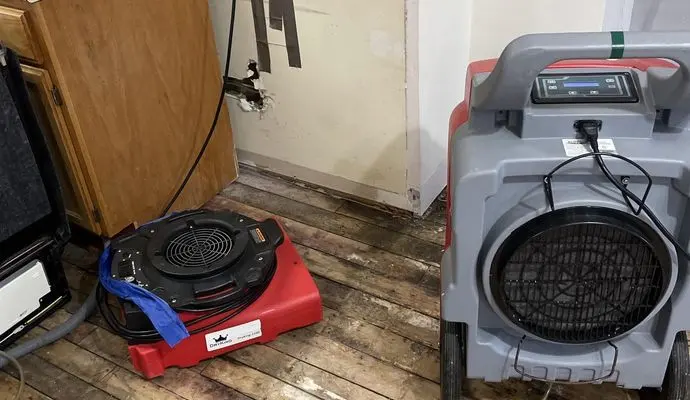
The extraction crew pumps out the standing water first, and the drying team then works through what the water touched. A basement flooding cleanup in Trenton follows the same order for a finished space and an unfinished one, with more removal in the finished space.
Extraction and removal
- Standing water is pumped out and carpet and pad are lifted.
- Drywall is cut out above the wet mark, along with trim and baseboards that soaked.
- Flood water counts as contaminated, so soaked porous materials do not stay.
Drying
Trenton's median home was built in 1960, and about 7,038 of its 8,288 homes, roughly 85 percent, were built before 1980. Structural drying in Trenton covers framing and wall materials from several decades of building.
A flood cleanup in Trenton is finished when moisture readings match a dry reference, not when the basement feels dry.
Insurance and the paperwork
The city's flood map page says a standard homeowner's policy does not cover flood damage, and that anyone can buy flood insurance if the community belongs to the National Flood Insurance Program.
That makes the policy language the first thing to check, ahead of the cleanup bill.
- Dated photos and video from before cleanup begins
- A list of damaged finishes and belongings with rough ages and values
- A separate record for the furnace or any appliance that sat in water
- The restoration team's moisture readings and removal records
Questions
How many Trenton homes flooded in August 2014?
The 2017 city plan says 14 homes flooded in the storm of about 4 to 6 inches over a couple of days.
Why did a finished basement change flood repair costs?
The plan says costs varied with finished basements and stored furnaces. Finished space holds carpet, drywall and trim that must be removed or replaced, and a furnace in water needs inspection.
Is the figure of about 825 floodplain homes current?
No. It is the 2017 plan's figure after FEMA's 2012 maps took effect, so it describes that moment rather than today.
Does a standard homeowner's policy cover flood damage?
The city's flood map page says it does not. Flood insurance is separate, and anyone can buy it if the community belongs to the National Flood Insurance Program.
Can a furnace be used again after it sat in flood water?
Not until a technician has checked it. Water can damage controls, wiring and burners, so it should stay off until it has been inspected.
How did the August 2014 storm compare with a smaller one?
The 2017 plan describes August 2014 as about 4 to 6 inches over a couple of days. It calls a September 2016 storm less severe, with about 2.5 inches of precipitation.