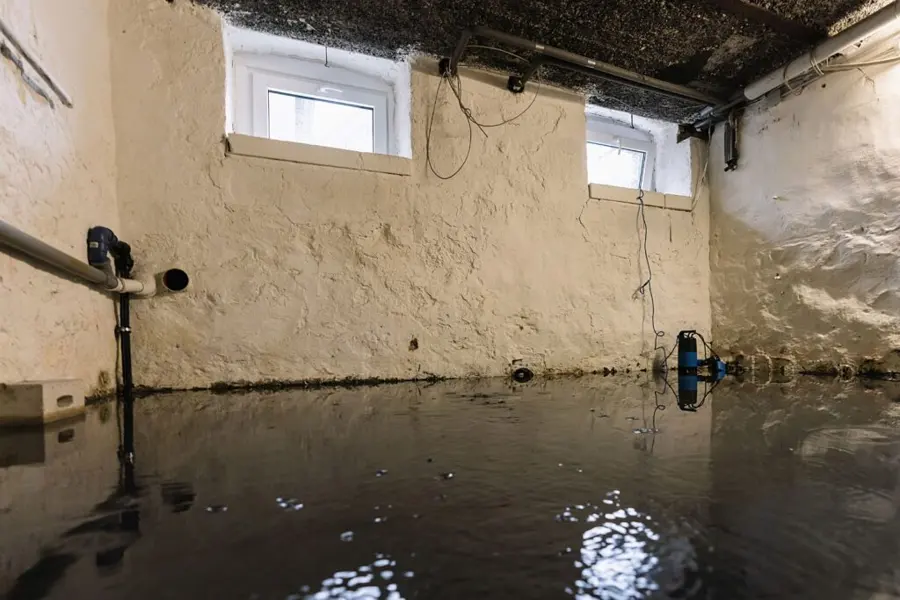
On Friday, July 19, 2019, a storm hit Flat Rock, and a city official estimated that as much as 6.2 inches of rain fell in about 35 minutes. Water stood knee deep in the Woodcreek subdivision, and basements flooded along Aspen, Tamarack and Magnolia streets. The News-Herald called Flat Rock one of the hardest hit Downriver communities.
Key takeaways
- A city official estimated as much as 6.2 inches of rain in about 35 minutes on July 19, 2019. That figure is an estimate, not a gauge reading.
- Water was knee deep in Woodcreek, and basements flooded along Aspen, Tamarack and Magnolia streets.
- ClickOnDetroit reported that the downpours overwhelmed drains and flooded subdivisions and main roads, so water came in over the ground as well as through pipes.
- Electricity is the first danger in a wet basement, before any water is removed.
- Extraction comes before drying, and moisture readings in drywall, framing and flooring decide when the job is done.
The night of July 19, 2019
What the city and the papers reported
A city official estimated that as much as 6.2 inches of rain fell in about 35 minutes. That is an estimate, so it is not a measured total.
The News-Herald called Flat Rock one of the hardest hit Downriver communities. ClickOnDetroit reported that downpours that night overwhelmed drains and flooded subdivisions and main roads.
A heavy rain a year earlier
The 2019 storm was not the only soaking. On August 1, 2018, National Weather Service rainfall reports near Flat Rock ranged from 1.03 to 2.96 inches by early morning.
Heavy rain twice in about a year is a reminder that a flooded basement is a scenario worth planning for.
Where the water went in Flat Rock
The reports name specific places, which helps homeowners see how widespread the water was.
Flat Rock's Department of Public Services runs the city's water and sewer system and cleans and maintains the sanitary and storm sewers and retention basins, so a storm like this one tests that whole system.
- Woodcreek: water knee deep in the subdivision
- Aspen, Tamarack and Magnolia streets: basements flooded
- Drains and main roads: overwhelmed drains and flooded roads, according to ClickOnDetroit
How a flash flood gets into a basement
A flash flood does not need a river. When rain falls faster than storm sewers, ditches and retention basins can carry it off, water spreads over yards and streets and runs to the lowest ground.
Once it reaches a house, it finds the weak points.
- Window wells that fill and spill over the sill
- Doors and garage thresholds at ground level
- Cracks in walls and the seam where a floor meets a wall
- Floor drains, when the sewer or storm drain is overloaded
- Sump pits that overflow when the pump cannot keep up
First steps in a flooded basement
Water that pours in from streets and yards is not clean, and the restoration team treats it that way. That shapes what is saved and what goes.
A few steps protect people and the claim before the pumps start.
- Treat electricity as the first danger, and stay out of standing water while outlets, cords or the panel could be live.
- Photograph the water level and the damage before anything moves.
- Lift papers, electronics and keepsakes out of reach, wearing boots and gloves.
- Leave furnaces, water heaters and electrical equipment that stood in water for a technician to check.
- Keep children and pets away, since water from outside carries soil and sewer contamination.
- Write down the date, the time the water came in and what the rain was doing.
How extraction and drying work
Extraction first
The extraction crew pulls standing water out with pumps and truck mounted or portable units before it can soak into drywall and framing. Water extraction in Flat Rock starts there for a reason: every extra inch of water left behind wets more material.
Carpet and pad that sat in flood water are usually removed, since they hold contamination.
Drying and readings
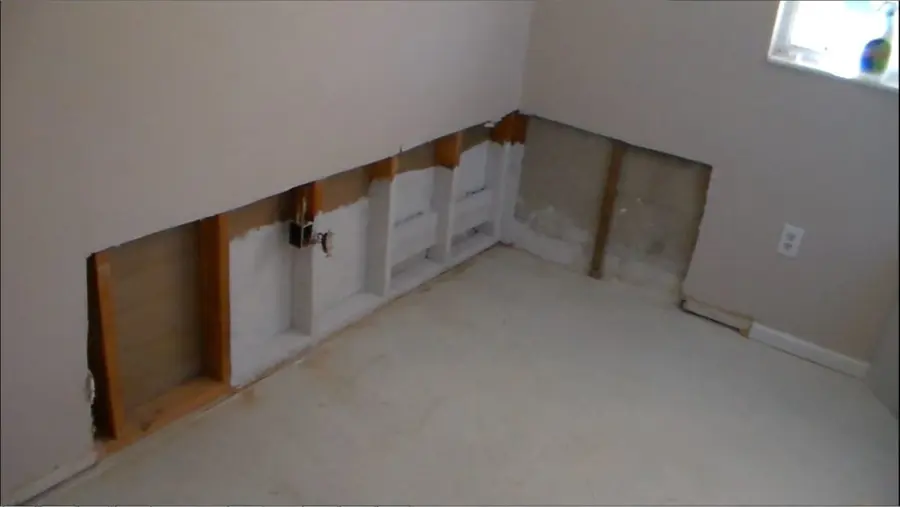
The drying team opens wall cavities where needed, sets air movers and dehumidifiers and logs moisture readings each day.
Flat Rock's median home was built in 1985, and 1,869 of its 4,169 homes predate 1980, so readings cover framing and drywall from several decades of building.
- Drywall that stayed wet is cut out above the wet mark.
- Wall cavities are opened where moisture is trapped behind panels.
- Equipment stays until framing and flooring read dry, not just until they feel dry.
Silt, odor and the first week
Flood water leaves silt behind, and silt holds moisture and odor against floors and the bottom of walls. The crew cleans those surfaces after extraction and before the final drying.
A typical basement loss unfolds in stages.
- Day one: assessment, moisture mapping, extraction and removal of soaked pad and drywall
- The next several days: air movers and dehumidifiers run while the crew logs daily readings
- The last visit: equipment comes out only when the readings match a dry reference
- After that: rebuilding can start on surfaces that tested dry
Records and insurance after a flash flood
Insurance coverage depends on how the water entered. Water from the surface, a sewer backup and a failed pump can fall under different parts of a policy, or under none.
The City of Flat Rock's flood plain page links FEMA flood insurance rate maps and letters of map change, which help owners check how their address is mapped.
- Photos and video from before cleanup begins
- A list of damaged items with rough ages and values
- The moisture readings and removal records from the restoration team
- Notes on when the rain started and when water reached the basement
Owners and renters
Flat Rock has 3,263 homes occupied by their owners and 661 occupied by renters. Owners start with their own insurer.
Renters tell the landlord first, since the building is the landlord's, and a renter's policy, where one exists, usually covers belongings rather than the structure.
Getting ready for the next fast storm
Fast rain cannot be prevented, but the next one goes better with a plan. Basement flooding cleanup in Flat Rock is easier when valuables are already off the floor and the electrical panel is easy to reach.
For homes with a basement, a few habits help.
- Keep stored items on shelves instead of the floor.
- Check that window wells and drains are clear before heavy rain.
- Know where the electrical panel and the main water shutoff are.
- Know who to call before the water rises; the Flat Rock water damage pros handle extraction and drying around the clock.
Questions
Was 6.2 inches of rain measured in Flat Rock on July 19, 2019?
No. A city official estimated as much as 6.2 inches in about 35 minutes. It is an estimate rather than a gauge reading, so it should be quoted that way.
Which Flat Rock streets had flooded basements in that storm?
Basements flooded along Aspen, Tamarack and Magnolia streets, and water was knee deep in the Woodcreek subdivision.
Is storm water in a basement treated as clean water?
No. Water that comes in from yards, streets and drains can carry soil and sewage, so the restoration team handles it as contaminated and removes soaked porous materials.
How soon should drying begin after a basement floods?
As early as possible. Mold can take hold in damp materials within 24 to 48 hours, so extraction and drying equipment go in as early as the water allows.
Does homeowners insurance pay for flood water in a basement?
It depends on the policy and on how the water entered. Surface flood water, sewer backup and pump failure are often treated differently, so the policy wording and the insurer decide.