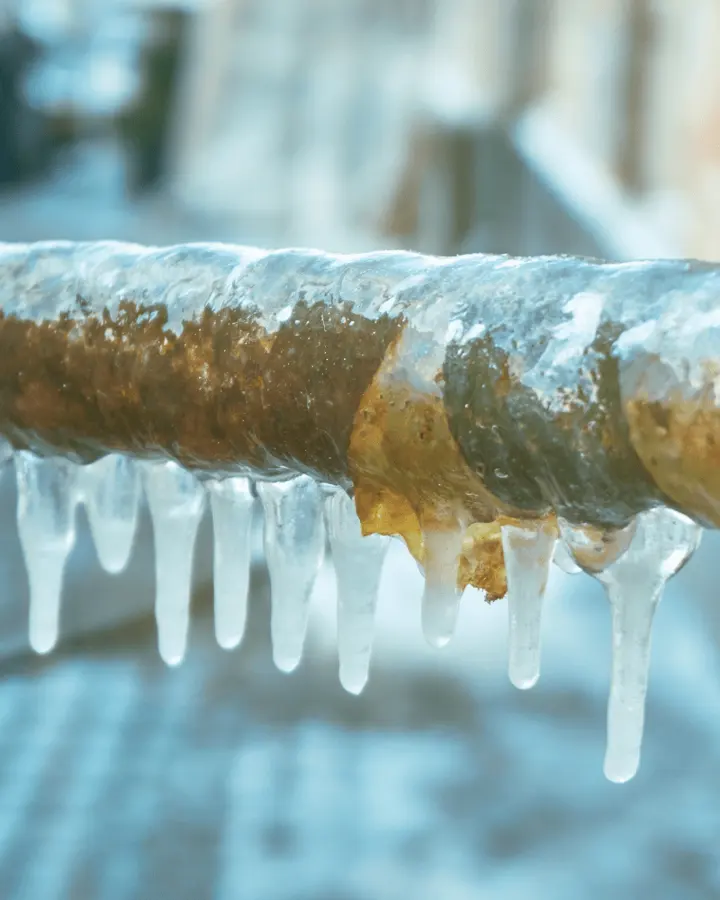
January lows in Monroe average about 16 degrees Fahrenheit, and the city gets about 28.5 inches of snow in a year. That cold finds the weak spots in older houses first: pipes in outside walls, crawl spaces and attached garages. A pipe that freezes is a warning, but a pipe that splits can flood a wall cavity before anyone sees it.
Key takeaways
- Pipes freeze first where cold air reaches them: outside walls, crawl spaces and attached garages.
- Monroe's January lows average about 16 degrees and the city gets about 28.5 inches of snow a year, so hard freezes are routine.
- A frozen pipe is a warning. The water damage starts when the ice melts or the pipe splits, so the main shutoff matters.
- A split pipe inside a wall is dried inside the cavity, with the wall opened where moisture is trapped.
- Steps taken before the first hard freeze, such as insulating exposed pipes and keeping the heat steady, lower the risk.
Why pipes freeze and split in older Monroe houses
A large share of Monroe homes predate 1960. Many are two story frame and brick houses with full basements and galvanized or copper supply pipe.
In those houses, supply pipes often run through outside walls, crawl spaces and attached garages, which lose heat first.
The three weak spots
- Outside walls: pipes set against exterior sheathing have the least insulation between them and the cold.
- Crawl spaces: cold air moves under the floor and around pipes that are not wrapped.
- Attached garages: pipes that run along a garage wall or ceiling sit next to a space that is rarely heated.
What the climate adds
Monroe receives about 32.7 inches of precipitation and 28.5 inches of snow in a year, and its January lows average about 16 degrees. Cold nights come back every winter, so the risk is a yearly one.
How ice splits a pipe
Water expands as it freezes, but the ice itself is not usually what splits the pipe. The split more often forms between the ice blockage and a closed faucet, where trapped water has nowhere to go and pressure builds.
That is why a pipe can look fine while frozen and fail only as the ice thaws and the pressure escapes through the weak spot.
- Frozen: ice blocks the pipe, and the tap runs dry or slow.
- Pressurized: water trapped past the ice is squeezed as more ice forms.
- Split: the weakest point opens, often a joint or a thin spot in older pipe.
- Thawed: water pours through the split at full supply pressure.
Before the first hard freeze
Most freeze damage starts with a gap that was easy to fix in October. A short walk through the house now takes the surprise out of January.
- Know where the main water shutoff is, and make sure everyone in the house can turn it.
- Insulate pipes in crawl spaces, garages and along outside walls with foam sleeves.
- Seal gaps where pipes pass through walls, sills and the garage ceiling.
- Disconnect garden hoses and shut off outdoor spigots.
- Keep the heat on and steady, even when the house is empty.
- Open cabinet doors on outside walls so warm air reaches pipes under sinks.
- On the coldest nights, let a faucet drip on the pipe that runs through the coldest space.
Empty houses and cold snaps
A house that stands empty loses heat quietly, and a split pipe can run for days before anyone notices. Vacant rentals, cottages and the homes of travelers carry extra risk.
A little planning before the trip or the vacancy keeps the damage small.
- Keep the heat on at a steady, safe level for the whole time the house is empty.
- Ask someone to check the house during a hard cold snap.
- Shut off the main water valve for a long absence, if the plumber agrees it is safe.
- Leave the cabinet doors on outside walls open before leaving.
If a pipe freezes
A frozen pipe often shows up as a tap that gives no water, sometimes with frost on the outside of the pipe. That is the moment to act, before the ice melts or the pipe splits.
- Open the faucet so water and steam can leave as the ice melts.
- Warm the pipe slowly with a hair dryer or warm towels, working from the faucet toward the frozen section.
- Never use an open flame, a torch or any heater that could ignite what is nearby.
- If the pipe is inside a wall or cannot be reached, shut off the water to that part of the house and call a plumber.
- Check for leaks as the pipe thaws, because a split often shows only once the ice melts.
Which taps to check
The pattern of dry taps shows how far a freeze runs.
- If one faucet is dry, try the others on the same floor.
- A dry faucet on an outside wall points to a freeze in that wall.
- A dry tap in a bathroom above a garage points to pipes near the garage ceiling.
When a pipe splits
What happens inside the wall
When ice melts out of a split pipe, water runs at full supply pressure inside the wall, the ceiling or the floor above. Drywall and insulation soak, and the leak can run unseen until a stain, a bulge or a drip appears.
The first moves
A burst pipe water damage call starts with stopping the water.
- Shut off the main water valve.
- Turn off power to wet areas, but only from a dry spot.
- Photograph the damage and the failed section of pipe before repairs.
- Open cabinet doors and move belongings away from the wet wall.
After the thaw: signs of a hidden leak
Split pipes often show themselves after the temperature rises, because the thaw releases the water. The days after a cold snap are the time to look.
- A new stain or bubble in a ceiling below a bathroom or kitchen
- A damp smell in a cabinet, a closet or the crawl space
- The sound of running water when nothing is on
- A water meter that keeps moving with every tap closed
- Peeling paint or a soft spot on a wall that backs onto a bathroom
How the drying works inside the wall
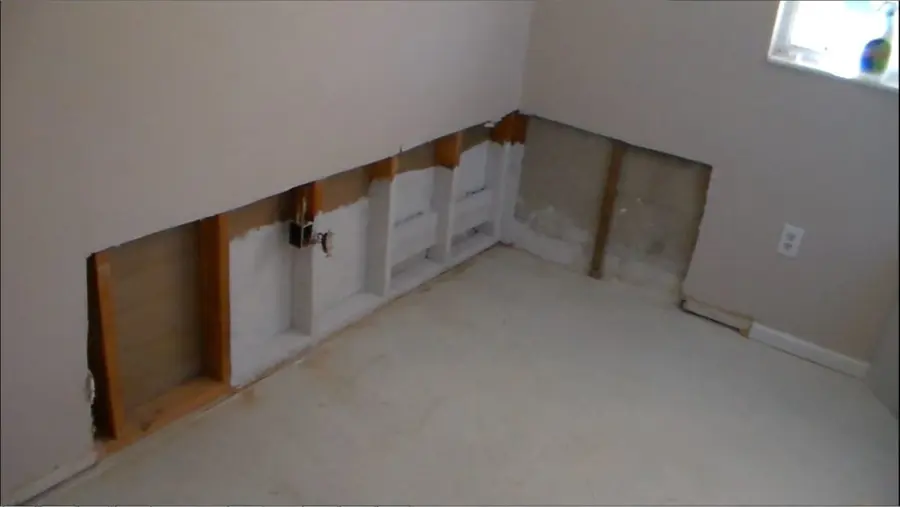
The extraction crew removes standing water first, and the drying team then follows the water to where it went. Frozen pipe water damage in Monroe is dried inside the cavity, which means opening the wall where moisture is trapped.
Moisture meters and a thermal camera map where the water went, so only the wet sections are opened.
- Wet insulation is removed, because it holds water against the framing.
- Drywall is cut out in sections above the highest wet reading.
- Air movers and dehumidifiers run as part of structural drying, and the framing is read until it matches a dry reference.
- Standing water on floors is handled by water extraction before any drying equipment is set.
Records for the insurer
Burst pipe claims turn on when the pipe failed, what it damaged and what was done to limit the loss. A clear file answers all three.
- Photos of the failed pipe, the wet area and the damaged finishes, with dates
- The failed section of pipe itself, if the plumber removes it
- The plumber's invoice and the time the water was shut off
- The restoration team's moisture readings and removal records
- A list of damaged belongings with rough ages and values
Questions
How cold does it have to get for pipes to freeze?
Pipes in unheated or poorly insulated spaces can freeze when temperatures stay below freezing for an extended time. Wind and drafts speed it up, so outside walls and garages go first.
Should faucets drip during a hard freeze?
A slow drip on the pipe that runs through the coldest space keeps water moving, which lowers the chance of a freeze. It does not replace insulation or steady heat.
Can a frozen pipe be thawed with a torch or heat gun?
No. Open flames and high heat can start a fire or damage the pipe. A hair dryer or warm towels, applied slowly, is safer.
How long does a wall take to dry after a burst pipe?
Often several days, depending on how much insulation and drywall is wet and what the readings show. The equipment stays until the framing reads dry.
Does homeowners insurance cover a burst pipe?
Many policies cover sudden water damage from a burst pipe, though some limit it when a home was left unheated. The policy wording and the cause decide, so the insurer should be asked early.