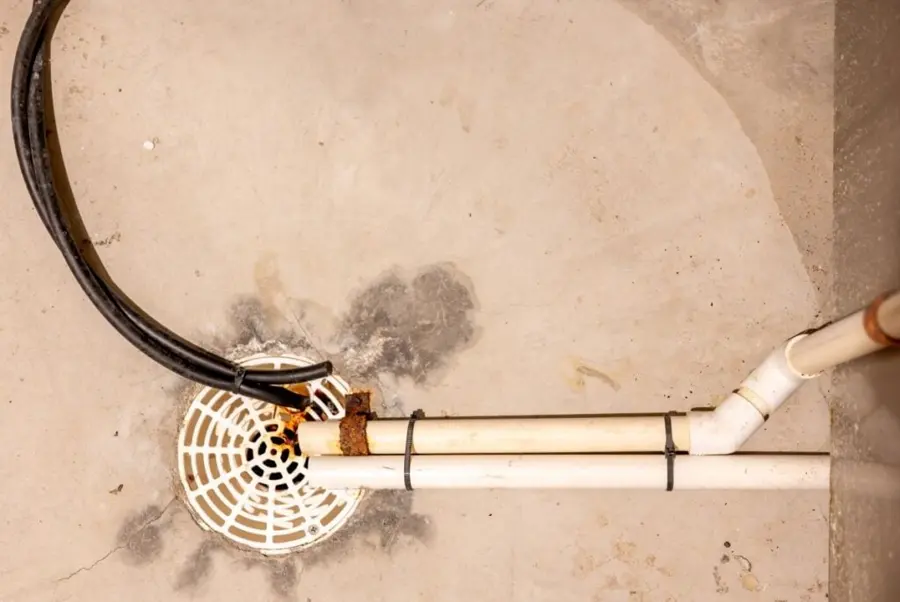
On August 24, 2023, thunderstorms dropped 4.19 to 4.51 inches of rain at weather stations around Monroe, according to the National Weather Service in Detroit. The City of Monroe's storm cleanup notice then described water coming up through basement floor drains across the city. A floor drain that backs up is a sewer problem showing itself at the lowest opening in the house.
Key takeaways
- Water that rises through a floor drain after a cloudburst is sewage, so it is handled as Category 3 from the start.
- On August 24, 2023, floor drains across Monroe backed up after 4.19 to 4.51 inches of rain, and the state declared an emergency for Wayne and Monroe counties.
- Stay out of the water, skip the shop vacuum and photograph everything before anything is moved.
- Carpet, pad, drywall and insulation that the water touched come out, while hard surfaces are cleaned and treated and framing is dried.
- Coverage for a sewer backup often depends on an endorsement, so the policy wording is worth reading before the claim begins.
What happened on August 24, 2023
The rain
Summer thunderstorms around Monroe can release rain faster than the ground and the sewers can take it, and that August day was a clear case.
Weather stations near the city recorded 4.19 to 4.51 inches, a large share of the roughly 32.7 inches that Monroe receives in a whole year.
The water in basements
The City of Monroe's cleanup notice described floor drain backups across the city, not on a single street.
The state also declared an emergency for Wayne and Monroe counties after the storm.
- Rain: 4.19 to 4.51 inches at stations around Monroe
- Inside homes: water rising through basement floor drains across the city
- Afterward: a state emergency declaration covering Wayne and Monroe counties
Why the floor drain is where the water comes up
A large share of Monroe homes predate 1960. Many of those two story frame and brick houses have full basements, cast iron drains and floor drains tied to the sewer.
When a cloudburst fills the sewer faster than it can empty, the pressure looks for the lowest open drain, and in an older house that is usually the one in the basement floor.
One drain or many
The pattern of the backup helps point to its source. A plumber can confirm it, but after a storm like the one in 2023 the sewer is the first suspect.
- One fixture backing up while the rest drain normally often points to a blockage in the house pipe.
- Several drains gurgling or rising together during heavy rain suggest the sewer itself is overloaded.
- Water that shows up only at the basement floor drain, with sinks and tubs upstairs draining normally, fits a sewer that is full below the house.
Early signs at the drain
- Gurgling from the floor drain while rain is falling
- A sewage smell near the drain or the laundry area
- Water that rises when a toilet is flushed or the washer drains upstairs
- Dark or cloudy water with debris in it
First steps in a flooded basement
Safety comes first. Standing water and electricity do not mix, so basement power should be switched off only if the panel can be reached without stepping into water.
If the panel is out of reach, an electrician is the next call.
- Stop using water: no flushing, laundry or dishwasher while the drain is backing up.
- Keep children and pets out of the basement and away from anything the water touched.
- Skip the shop vacuum and the bleach. Contaminated water needs protective gear and containment, and bleach does not make carpet safe.
- Leave a furnace, water heater or other equipment standing in the water alone until a technician has checked it.
- Photograph the high water mark, the drain and every wet item before anything is moved.
- Write down when the water came up and what the weather was doing.
- Wear boots and gloves for any unavoidable contact, and wash up afterward.
What Category 3 means for the household
Restoration crews sort water into three categories. Category 1 comes from a clean source such as a supply pipe, Category 2 carries some contamination, and Category 3 carries serious contamination such as sewage or flood water.
Clean water left standing can move up a category with time. Sewage starts at the top, so there is no stage at which a backed up basement is safe to handle without protection.
What stays and what goes
Sewage carries bacteria and viruses, and porous materials hold on to whatever they absorb. Those materials cannot be cleaned reliably, so they are removed rather than dried.
- Removed: carpet, pad, insulation, drywall and particleboard the water touched
- Cleaned and treated: concrete, tile, metal and sealed wood
- Cleaned, treated and dried: wall framing and the edge of the subfloor
- Photographed and listed before disposal: boxes, rugs and upholstered furniture from the backup area
How the cleanup and drying run
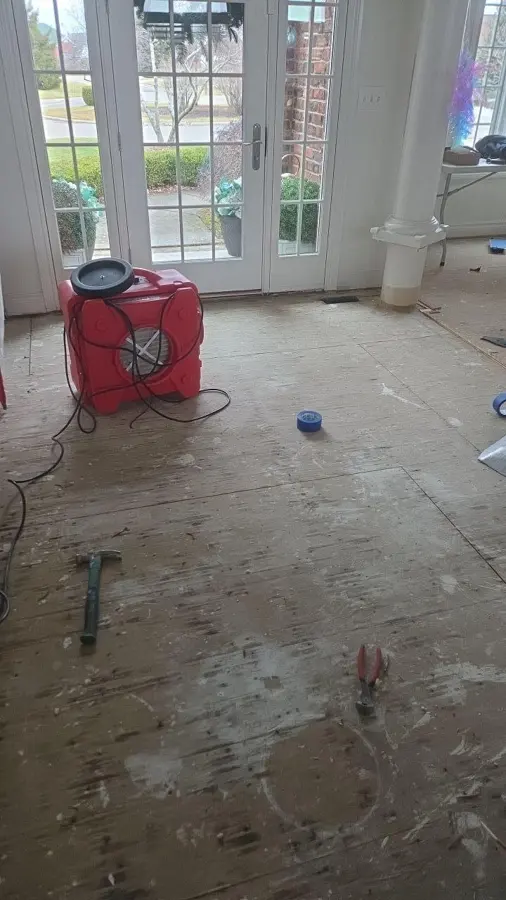
After the first steps, the restoration team takes over, and the plan for the basement flooding cleanup follows the water category.
Containment and removal
The crew works in protective gear and seals the area off, often with HEPA air scrubbing, so the rest of the house stays clean. A full sewage backup cleanup follows a set order.
- The sewage and standing water are pumped and removed.
- Carpet, pad and insulation the water touched are bagged and carried out.
- Drywall is cut out above the highest wet mark.
- Hard surfaces are cleaned, then treated with an EPA-registered antimicrobial.
Drying to a reading
Air movers and dehumidifiers dry what remains, and moisture readings on framing, subfloor and block decide when the equipment comes out. Damp materials can start growing mold within 24 to 48 hours, so structural drying begins as soon as removal ends.
The drying team logs readings every day, which also gives the insurer a record.
Records that help a claim
Adjusters decide water claims on the file, so a clear record matters more than a long story.
Many homeowner policies exclude sewer and drain backup unless an endorsement was added. The policy wording decides the claim, so it is worth reading before the first call to the insurer.
- Dated photos and video of the water, the drain and each damaged item
- A written list of what was removed, with rough ages and values
- The restoration team's removal records and daily moisture readings
- Receipts for emergency purchases such as boots, fans or storage
Telling the city
Letting the city know about the backup is also reasonable, since the August 2023 notice described the backups across the city.
A dated note of who was told and when keeps the record complete.
Lowering the odds before the next cloudburst
No step makes a basement backup proof, but a few lower the odds.
- Ask a plumber about a backwater valve on the sewer connection, which keeps sewage from flowing back into the house.
- Keep stored items on shelves, not on the floor, in any room with a drain.
- Clear gutters and downspouts so roof water does not add to the load around the foundation.
- Test the sump pump and its discharge before storm season, because a failed sump pump adds groundwater to the same basement.
Questions
Is water from a floor drain after a storm always sewage?
It should be treated that way. In a cloudburst the water comes up from the sewer, so it carries bacteria and is handled as Category 3 even when it looks clear.
Can a wet vacuum clean up a small backup?
A wet vacuum can spread contamination through its hose and exhaust. Protective gear, containment and an antimicrobial are needed, so the safer plan is to leave it to the restoration team.
How long does the cleanup take?
Removal and cleaning usually take a day or two. Structural drying then takes several more days, depending on how much wet material is left and what the readings show.
Does homeowners insurance cover a sewer backup?
Often only with a water or sewer backup endorsement. The policy wording decides it, and the insurer can explain the claim steps.
What if the backup came from the city sewer?
The cleanup is the same, and the record matters even more. Photograph the drain and the water, note the date and time, and let the city know.
Should a floor drain be plugged before a forecast storm?
A plug or standpipe can keep water from rising through the drain, but it can also push pressure to the next weak spot. A plumber can advise on the safest setup for a given house.